Let's Get That Pending Article Published To The World
For Adverts and Enquiries
Phone: 234 903 352 3975
Email: triplenetblogs@gmail.com

Let's Get That Pending Article Published To The World
For Adverts and Enquiries
Phone: 234 903 352 3975
Email: triplenetblogs@gmail.com





BY DAVID D. IHUA-MADUENYI, ESQ.
INTRODUCTION
The aim of this write-up is to provide a concise and handy reference point for the stakeholders like the Judges, Magistrates, Lawyers, Law Teachers, Law Students, the Police, the Correctional Officers, the Civil Societies/Non-Governmental Organisations etc., on the provisions of the current laws dealing with Non-Custodial sentencing options in Nigeria. This no doubt will enable them to utilize it in course of their work in the administration of criminal justice. So that the purpose of the provisions would be achieved.
This work will examine the Non-Custodial Sentencing provisions as contained in both The Administration of Criminal Justice Act (ACJA) 2015/similar Laws of the States, and the Nigerian Correctional Service Act 2019. For these are novel and historic pieces of legislations dealing with this area of our law.
DEFINATIONS
It is very proper at this stage to attempt definition of the terms to be used in this discourse.
1. CUSTODY: - Custody means the care and control of a thing or person for inspection, preservation, or security.¹
2. SENTENCE: - Sentence means the judgment that a court formally pronounces after finding a criminal defendant guilty; the punishment imposed on a criminal wrongdoer.²
3. NON-CUSTODIAL SENTENCE: - Non-custodial sentence refers to a sentence/disposition measure that is given to an offender that does not involve imprisonment. Depending on the offence, secondary or non-custodial options may be appropriate including disqualification, confiscation and compensation (These are used more in sex, drug and trafficking offences). In other words the sentence is served outside the physical facility designated as a prison which is administered by the state or by any other agency on behalf of the state. Other words that can be used interchangeably with the term ‘non-custodial measure’ is ‘non-custodial sanctions’, ‘non-custodial punishment’, ‘non-custodial sentence’, ‘alternatives to imprisonment’ or ‘alternatives to custodial sentence/sanction’.³
4. CUSTODIAL SENTENCE: - Custodial Sentence involves placement in a restricted area known as a prison or other such institution. This is the most frequently used penal sanction for crime. While imprisonment is necessary in many cases especially for very serious offences, it has not solved the problem of crime prevention or the social reintegration of offenders. Moreover on many countries prison system faces major challenges because of overcrowding and outdated facilities, with the result that prisoners find themselves in deplorable conditions of detention that could have adverse effects on their physical and mental health. It could also impede their educational/vocational advancement to an ordinary life thereby affecting their chances of future adjustment and development in their communities. The impact of long term imprisonment on a person’s life and work can be enormous. This could include psychological and health problems, death, stigmatization and social exclusion.?
5. OFFENDER: - Offender means all persons subject to prosecution, trial or the execution of a sentence, at all stages of the administration of criminal justice.?
SENTENCING
‘Sentencing’ is the climax in the process of trial in criminal proceedings in the courts of law. It is also the shortest but most solemn phase in the judgment process. Sentence is a sanction, an act of punishment. It is the final act of a sentencer. Behind every sentence, there is a ‘Sentencer’, known as a Magistrate or a Judge, who is vested by law with the jurisdiction to pass sentence on an offender.
Every society sets standards of behavior. And those who breach or flout the rules are corrected or punished. This is done as a way of restraining or discouraging deviant members of that society from jeopardizing other individuals or destroying the collective values of the society.
WHY NON-CUSTODIAL MEASURES
Over the years, the government has become concerned about the issue of over-crowding in the prisons (now known as the Correctional Centres). This over-crowding comes with its attendant problems of deplorable condition of sanitation, hygiene, disease and even death, among the inmates or detainees. Something has to be done to keep the inmates alive, because only the living can stand trial or be prosecuted by the courts. For as OBADINA JCA, put it:
As it is only the living that can praise God, so it is only the living that can be tried, convicted and punished for an offence, no matter how heinous the offence may be.?
The above is caused by the fact that the government has deliberately refused to build new prisons, despite an embarrassing surge in crime rates across the country. And the available space built to house a small number of persons, is now housing far more that is expected.
Available information shows that the country has 240 facilities across the 36 states (and the Federal Capital Territory, Abuja). And the population of persons at the correctional centres across Nigeria stands at 67,631 inmates, as at 30/3/2021. And the percentage of persons awaiting trial is put at about 70 percent.?
In very simple language, there are far too many persons inside the prisons, than the available spaces.
The law has provided some safeguards towards a periodic decongestion of the prisons. This is in the form of ‘Goal Delivery’.
Despite the above, the population of persons in the prison is still embarrassingly high. Hence there was the call for the adoption of non-c ustodial measures/sentences by the courts, in other to reduce the number of persons who are sent and kept in the prison.
As a way to now check the population of inmates, the law has provided certain safeguards:
A. The NIGERIAN CORRECTIONAL SERVICE ACT 2019 empowers the State Controller of Correctional Service to reject and refuse the admission of more inmates, once the Centre is filled to capacity.
“ Without prejudice to subsection (4), the State Controller of Correctional Centre in conjunction with the Superintendent shall have the power to reject more intakes of inmates where it is apparent that the Correctional Centre in question is filled to capacity”.?
B. The NIGERIAN CORRECTIONAL SERVICE ACT 2019, stipulates a duty upon the State Controller, to notify within one month, appropriate authorities, once the custodial centre has exceeded its capacity.
The appropriate authorities to be so notify are: (a) Chief Judge of the State; (b) the Attorney-General of the State; (c) Prerogative of Mercy Committee; (d) State Criminal Justice Committee; and (e) any other relevant body. ?
C. The Act also imposes a duty on the appropriate authorities/relevant bodies to act, within three months, by taking necessary steps to rectiy overcrowding.??
D. Furthermore, the Act imposes sanctions upon both the State Controller of Corrections, and the Superintendent who refuses to notify the relevant bodies as to the overcrowding in the Custodial Centres.¹¹
E. The Act empowers, the Controller to consider for release or diversion of inmates to Non-Custodial Centres. This involves inmates already serving their terms of imprisonment in the custodial centres, being removed to serve and complete their terms under the non-cutodial centres. And the inmates eligible for this are: (a) inmates sentenced to three years and above with less than six months to the completion of their sentences; (b) inmates charged, convicted or sentenced for minor offences; (c) inmates with civil cases; and (d) any other criteria as may be determined by the Chief Judge or the Prerogative of Mercy Committee.¹²
The above provisions are highly commendable efforts, all aimed at decongesting our Correctional Centres. It is indeed very clear that our laws want to see fewer persons inside the correctional or custodial centres.
Our current laws make very copious provisions for non-custodial sentencing measures. This is not only novel, but shows that there is now a shift in the philosophy of sentencing which shows a positive disposition toward the offender’s reformative considerations. And a true concern for the interest and well-being of not only the offender, but the society.
NON-CUSTODIAL SENTENCING
I shall attempt a step by step consideration of the provisions of the Administration of Criminal Justice Act 2015, and the Administration of Criminal Justice Laws of Rivers and Lagos States as it relates to non-custodial sentencing, together with the provisions of the Nigerian Correctional Service Act 2019, especially its Part II, which also deals with Non-Custodial Service.
SENTENCING IN TRIALS
Every court trying an offender has the power to impose punishment on the defendant, once the court comes to the conclusion that the offender is guilty of the charge. It is the imposition of the punishment that is known as sentencing.
Even if a magistrate or judge has ernomous powers, while imposing a sentence on the offender, the power of the Magistrate or Judge is limited in law. As the sentence is bound by the provisions of the law creating the offence. For the court is bound to make use of the punishment stipulated by the law creating the offence. He cannot go outside the law. Where an offence carries mandatory sentence, the court cannot go outside the law. For example, capital offences like armed robbery and murder, which carries death sentences, a court has no discretion, than to impose the mandatory punishment imposed by law.¹³
Except specifically stipulated by law, the prescribed punishment means the maximum sentence. However, it is not mandatory that the maximum sentence stipulated by law be imposed on the offender by the court.¹?
PRINCILPES INVOLVED IN SENTENCING
Certain principles have come to be acceptable as relevant in sentencing, and they include the following-: Revenge, Retribution, Just Desert, Deterrence, Incapacitation, rehabilitation, and Restoration.
THE PURPOSE OF SENTENCING AN OFFENDER
Generally the aim of sentencing an offender includes:
a) To keep the offender away from the society b) Deterrence- to reduce crime, prevent re offending c) Reform and Rehabilitation of offenders d) Protection of the public e) Retribution is punishment inflicted as revenge for doing wrong or committing crime (an eye for an eye), it’s an archaic measure
f) Reparation includes compensation includes reparation, repayment, atonement, etc by the offender to those affected by the crime
g) Denunciation-Reflecting society’s abhorrence of the crime.
It will be historically informative at this juncture to briefly trace the origin of the non-custodial system in our corpus juris. The same has its origin and roots from the United Nations Standard Minimum Rules for Non-Custodial Measures 1990 (otherwise known as the Tokyo Rules).
These Rules were developed due to the short-comings of imprisonment as a form of penalty. As it does not constitute a panacea either for the prevention of crime or to the social reintegration of offenders. The very poor condition of some prisons system across the countries did not also help in any way. Fueling the need to do something more humane and acceptable for the system. Thus, experts tried to develop other useful measures to help offenders while keeping them in the community. Thus the goal of the Tokyo Rule is stated as follows-
The purpose of non-custodial measures in general, and the Tokyo Rules in particular, is to find effective alternatives to imprisonment for offenders and to enable the authorities to adjust penal sanctions to the needs of the individual offender in a manner proportionate to the offence committed.
Consequently, the Tokyo Rules enjoins member-states to “develop non-custodial measures within their legal systems to provide other options, thus reducing the use of imprisonment, and to rationalize criminal justice policies, taking into account the observance of human rights, the requirements of social justice and the rehabilitation needs of the offenders”.¹?
Numerous Non-Custodial measures at Trial/Sentencing and Post Sentencing Stages were outlined and recommended. They are as follows:
1. Verbal sanctions such as admonition and warning.
2. Conditional discharge
3. Status penalty
4. Economic sanctions/Monetary penalties, such as fines and day fines
5. Confiscation or expropriation order
6. Restitution to the victim or compensation order
7. Suspended/deferred sentence
8. Probation and Judicial supervision
9. Community service order
15. United Nations (UN) Tokyo Rule 1.5.
10. Referral to an attendance centre
11. House arrest
12. Any other mode of non-custodial treatment, or some combination of these measures.
The above are non-custodial measures at trial and sentencing stages.
The measures for post sentencing measures includes:
I. Furlough and half-way house
2. Work and education release
3. Various forms of parole
4. Remission
5. Pardon.
Some academics and writers have opined that the term “Non-Custodial sentences” should not be used. They argued that the term gives the false impression that these sentences are alternatives to imprisonment, wrongly implying that custody is the main or default sentence type. They suggested that the term “Community Sanctions and Measures” be used instead.¹?
THE ADMINISTRATION OF CRIMINAL JUSTICE ACT (ACJA) 2015
It was due to inadequacy of the legal regime to meet up all the aims discernable in sentencing that a new legal regime was put in place with the hope that it will respond to the inadequacies in our criminal justice system. This heralded the
emergence of the Administration of Criminal Justice Act which came into being on the 13th day of May 2015.
Act provides as follows;
(1)The purpose of this Act is to ensure that the system of Administration of Criminal Justice in Nigeria promotes efficient managements of Criminal Justice institutions, speedy dispensation of justice, protection of the society from crime and protection of the rights and interests of the suspects, the defenders, and the victim
(2)The courts, law enforcement agencies and other authorities or persons involved in criminal justice administration shall ensure compliance with the provisions of this Act the realization of its purposes.¹?
Four basic objectives or goals can be discerned from the provisions Act as quoted above, namely:-
i. Efficient management of criminal justice institutions.
ii. Speedy dispensation of justice.
iii. Protection of the society from crime.
iv. Protection of the rights and interests of the suspect, the defendant and the victim.
The Act shows a shift from Punishment as a cardinal objective of the criminal justice, to Restorative Justice that pays attention to the needs of the society, the victims, vulnerable persons and the respect for human dignity.¹?
Very copious provisions are made for the benefits, well-being and interest of the offender.
Other States of the Federation started to replicate the provisions of the Act in their own States. Rivers State repealed its Criminal Procedure Law Cap. 38 Laws of Rivers State of Nigeria 1999, and enacted The Rivers State Administration of Criminal Justice Law No. 7 of 2015, which came into effect on 17th of September, 2016. With the same objectives, spirit and purpose as the Federal Act.
Note that Lagos State was the first to enact its own Administration of Criminal Justice Law in 2011, even before the enactment of the Act by the National Assembly. The one of Lagos State is known as Administration of Criminal Justice (Repeal and Re-Engagement) Law 2011, and it took effect on the 8th of August, 2011.
The new Act made adequate provisions for the use of non-custodial sentencing measures, which is a welcome and positive departure from the old regime.
NON-CUSTODIAL SENTENCING PROVISIONS UNDER THE ACT
The Administration of Criminal Justice Act 2015 and the Administration of Criminal Justice Laws of the States makes adequate provisions for Non-Custodial sentencing by the courts, as an alternative to passing a sentence of imprisonment. And they include the following:-
1. Cost, Compensation, Damages and Restitution
2. Fines
3. Deportation
4. Probation
5. Suspended Sentence
6. Community Service
7. Detention at a Rehabilitation and Correctional Centre
8. Parole.
1. COSTS, COMPENSATION, DAMAGES AND RESTITUTION
The court is now empowered to order a convict to pay costs, compensation, damages and to make restitution to the victim or victims of the crime. This may be the alternative to imprisonment or part of the terms of any sentence so imposed. It is the victim that these payments are made to, not to the state or government.¹?
2. FINES
The court has the powers to order a convict to pay a fine, with or without a sentence of imprisonment.²?
Note that fines paid go to the public treasury ie the government account.
3. DEPORTATION
The court has the power to order the deportation or removal of a defendant from Nigeria (of a person not being a citizen), to his own country. This is for offences punishable by imprisonment without option of fine.²¹
The court also has the powers to recommend to the Minister of Interior, for the deportation of any person (not being a citizen), for reason of security and peace, and for dangerous conduct.²²
4. PROBATION
Probation is “a court-imposed criminal sentence that subject to stated conditions, releases a convicted person into the community instead of sending the criminal to jail or prison”.²³
The court has the powers to order the release of a defendant on probation.²?
5. SUSPENDED SENTENCE
A suspended sentence involves a situation where a court imposes a prison sentence on a convict, but suspends the enforcement of the imprisonment terms, upon certain conditions or no conditions at all.
The court has the power to impose suspended sentence upon a defendant.²?
6. COMMUNITY SERVICE ORDER
Community service order requires a convict to do unpaid work in the community as reparation for the offence, in the place of imprisonment.
The court has the power to sentence a convict to community service.²?
Note that by Section 460 (3) of the Act, community service order and suspended sentence order cannot be made in respect of an offence involving the use of arms or offensive weapon, sexual offence, or an offence which the imprisonment exceeds 3 years imprisonment.
7. CONFINMENT IN A REHABLITATION OR CORRECTIONAL CENTRE
The court has the power to order that a defendant/convict be sentenced to be confined in a rehabilitation or correction Centre established by the federal government, in lieu of imprisonment. Provided the offence is triable summarily, and the court is to consider the: - age of the convict, fact of the convict being a first offender, and other relevant circumstances. Where the person standing trial is a child, the court will make the order.²?
8. PAROLE
Parole is a conditional release of a convict from prison, during the pendency of the term of imprisonment, and before the completion of prison term.
The court has the power to release a convict on parole. Upon the recommendation of the Comptroller General of Prison that the convict is of good behavior, and has served substantial part of the term.²?
Note that under the Laws of Rivers State, it is the Comptroller of Prisons that is to make the report (not to the court, but) to the Administration of Criminal Justice Monitoring Council.
A prisoner released under this provision shall undergo a rehabilitation programme in a government facility or another appropriate facility, to enable him to be properly reintegrated to the society.
POWER TO MAKE RULES OF COURT
The Act empowers the Chief Judge of the Federal High Court or of the Federal Capital Territory to make rules in respect of the regulation and management of non-custodial punishments provided under this Act; and generally for carrying into effect the purposes of this Act.²?
The Administration of Criminal Justice Law of Rivers State makes more copious provisions, which empowers the Chief Judge to make Rules of Court in this regard, compared to the Act or the laws of other States.
The Rivers State Law in addition, empowers the Chief Judge to make Practice Direction governing the progression and management of criminal trials, among others.³?
And the Chief Judge of Rivers State pursuant to the above has put in place the Rivers State Administration of Criminal Justice Rules 2020, which commences on the 9th of November, 2020.
The Rules makes elaborate provisions for Arrest, Custody, and Remand; Trial; Custodial and Non-Custodial Sentencing, and Administrative Proceedings among others.
The Part Four of the Rules, make provisions for a Sentencing Hearing; Community Service, Parole among others, as follows:
PART FOUR
CUSTODIAL AND NON-CUSTODIAL SENTENCING
ORDER FOURTEEN
Sentencing
1. Where the court convicts the defendant, the court may for the purpose of determining an appropriate sentence conduct a hearing.
2. The hearing may be conducted at a subsequent date appointed by the court or immediately after conviction.
3. For the purpose of the sentencing hearing, the court shall proceed in line with the provisions of sections 318 and 424 of the Rivers State ACJL and consider any mitigating or aggravating factor disclosed in evidence.
4. Where by virtue of any other law, evidence of previous conviction of person is required; the court may have recourse to the Register of Convicted Persons provided under these Rules.
ORDER FIFTEEN
Community Sentence
1. A court may with or without conditions, sentence the convict to perform specific service in his community or any other place as the court may direct.
2. The operations and functions of community service centre shall be in accordance with the provisions of section471 and 472 of the Rivers State ACJL or any other relevant law.
3. The court in exercising its power shall consider whether such order is consistent with the:
(a) Decongestion of Correctional institutions;
(b) Rehabilitation of offenders by engaging them productively;
(c) Need to keep separate persons convicted for minor offences from persons convicted for serious offences or who are hardened.
4. A community sentence order may be imposed in any of the following circumstances:
(a) Damage to property;
(b) Assault without grievous bodily harm;
(c) Where the court is of the opinion that non-custodial sentence would be more effective in the circumstances;
(d) Where the person is a first time offender and has committed a minor offence.
5. In issuing a community service order, the court may impose additional measures which may include:
(a) Restricting the offender to a particular residence or place at certain times or maintaining a ‘curfew’;
(b) Ordering the offender to wear an electronic tag to ensure compliance with the sentence;
(c) Appointment with a designated manager;
(d) Barring the offender from going to certain places or areas including the place of abode or work of a victim;
(e) Barring the offender from taking part in certain activities, such as visiting a bar, children community centre or activities likely to threaten the safety of other people.
ORDER SIXTEEN
Parole
1. The objective of parole shall be to grant conditional or unconditional release to a prisoner who has exhibited good behavior; and has served at least one-third of his prison term, where he is sentenced to imprisonment for a term of at least 15 years or where he is sentenced to life imprisonment.
2. The court shall within 30 days of receiving the report referred to under section 478 of the Rivers State ACJL schedule a hearing for consideration of the parole.
3. The state and the convict or his counsel shall be given not less than two weeks’ notice before the date fixed for hearing.
4. The court may after hearing the state and the convict or his counsel, order that the remaining term of his imprisonment be suspended, with or without conditions, as the court considers fit, and the prisoner shall be released from correctional centre on the order.
5. Where a prisoner sentenced to life imprisonment is considered for parole, such prisoner maybe released on a license which is revocable where the prisoner violates the terms of parole.
6. A prisoner released under Rule 4 of this Order shall undergo a rehabilitation programme for a period of not more than 3 months in a government facility or any other appropriate facility to enable him be properly reintegrated into the society.
7. The Controller-General of the Nigerian Correctional Service shall make appropriate arrangement for the facility.
8. The Chief Judge may in special circumstances order that the convict be taken to a private or undisclosed facility where his safety can be guaranteed.
9. A parolee shall report and register his attendance at the correctional centre where he is serving sentence or at a place or to a person designated by the court at least once every month and ensure that he resides within a reasonable distance or as provided for by the parole order.
10. A parolee may be recalled to serve further terms or have his parole revoked entirely if he breaches any of the conditions in the parole order.
In addition, the Rules make more detailed provisions for Legal Aid Providers, Register of Convicted persons, Witness Expenses, Visitation to Detention Facilities, and Licensing of Probation Officer.
Interestingly, the Rules has an Explanatory Note, which states as follows:
“These Rules sets out to aid in the implementation of the Administration of Criminal Justice Law 2015, in line with its objectives and purpose of ensuring fair, effective and efficient dispensation of Criminal Justice”.
To further put into effect the provisions of the Rivers State Administration of Criminal Justice Rules 2020, a list of Institutions in Rivers State where Non-Custodial sentence could be served has been released. They include:
1. Rivers State Waste Management Agency (RIWAMA)
2. Rivers State Hospital Management Board
3. Rivers State Senior Secondary School Board
4. Rivers State Universal Basic Education Board
5. Rivers State University
6. Ignatius Ajuru University
7. Ken Saaro-Wiwa Polythectic, Bori
8. Elechi Amadi Polythecnic
9. The Local Government Authorities
10. Port Harcourt Zoo
11. The Judiciary.
The nature of works to be done are described thus ”Various menial jobs are available within the daily routines of the above listed institutions. Some of the activities may include:
Environmental sanitation exercise within town;
Grass cutting in schools and government institutions with large premises;
Laundry services in hospitals and government guest houses;
Farm work in Government Agricultural farms;
Sweeping of roads;
Cleaning of government offices;
Teaching in government institutions (for those qualified);
Cleaning of public hospitals;
Public work like filling of potholes with sands;
Sensitization campaign for government health and environmental programs;
Cleaning of public toilets;
Distilling of gutters;
Cleaning of court premises;
Cleaning motor parks and toilets.
THE PROVISIONS OF THE NIGERIAN CORRECTIONAL SERVICE ACT 2019
This Act according to its explanatory memorandum has the inmates in mind, as it consider the inmates as persons whose rights are to be protected.
In its long title, the Act sets out to make provisions for non-custodial measures. And it has legislated the creation of the Non-Custodial Service as a division under the Correctional Service. With one Deputy Controller designated to be in charge of the Non-Cusodial Service.
The very lofty objectives of the Act are as follows:
(a) ensure compliance with international human rights standards and good correctional practices;
(b) provide enabling platform for implementation of non-custodial measures;
(c) enhance the focus on corrections and promotion of reformation, reablitation and reintergration of offenders; and
(d) establish institutional, systematic and sustainable mechanisms to address the high number of persons awaiting trial.³¹
Part of the duties and functions of the Controller General is to ensure the administration of non-custodial measures, and to develop a yearly plan for the activities of the non-custodial service.³²
Admirably, a whole part of the Act (Part II), made up of eight sections is devoted to the Non-Custodial Service.³²
The non-custodial measures listed therein include:
(a) community service;
(b) probation;
(c) parole;
(d) restorative justice measures; and
(e) any other non-custodial measure assigned to the Correctional Service by a court of competent jurisdiction
The above give the courts the powers to specify the type of non-custodial sentence to impose on an offender in any given situation. This goes to show that the types of non-custodial measures are not closed, provided it will keep the offender out of confinment.
The Act empowers the President to appoint, and the National Assembly to constitute a body to be known as the National Committee on Non-Custodial Measures.
And the functions of the Committee shall:
(a) coordinate the implementation of non-custodial measures with the judiciary and other relevant agencies;
(b) monitor and propose measures for effective operation of non-custodial measures;
(c) receive and consider any complaint or view from the offenders, victims and affected communities, and make recommendations, where possible, on the nature of non-custodial measures; and
(d) perform any other function required for the proper implementation of this Act.³³
The Controller-General is empowered by the Act to set up similar committees at the Federal Capital Territory, and the various States. And such Committees so set shall have same functions like the National Committee.³?
The Act further empowers the Controller-General to administer and ensure proper administration of the processes of Parole, Probation, Community Service and Restorative Justice measures.³?
Finally, the Act provides for the creation of a Special Non-Custodial Fund, to assist the proper implementation of the non-custodial measures as outlined in the Act.³?
RECOMMENDATIONS AND CONCLUSION
In the entire trial process, Sentencing is the most important step. It is at that stage that the fate of the offender is determined. It is at this stage that members of the public know what becomes of the person accused and tried for the crime/offence committed.
Very importantly, sentencing is always often used by the public to weight the integrity of the Judge and the court.
These non-custodial sentencing methods are aimed, not just for the punishment of the offenders, but to preserve harmony in the society, reform the offenders and pacify the victims. Thereby creating social-equilibrium.
Custodial sentencing should not be the first option available to the courts. Courts are advised to start with the non-custodial options and then move on to the custodial sentencing, only thereafter.
States are advised to put in place the statutory Administration of Criminal Justice Monitoring Committees /Councils, which is relevant in giving effects to the sections of the Law, especially relating to Parole. Progressively, some states including Lagos and Rivers States have the ACJMC on ground. Others are enjoined to set up theirs.
So also the federal government is enjoined to give effect to the laudable provisions of the Nigerian Correctional Service Act 2015, especially those requiring the formation or creation of certain bodies to give effect to the non-custodial measures in the Act.
Since the passage of the Act and the Laws by the various states, it can still be seen that our Custodial Centers are still over-crowded. And the number of awaiting trial inmates is still in the majority. This is not a good development. This may seem to be the narrative in the short term, but in the long term, the situation might change for the better.
The relevant stakeholders should ensure that they all play their parts towards ensuring that the purpose of the Act and Laws are realized. The role of the court in the whole process, cannot be over emphasized. They indeed have a lot to do in ensuring that this new regime works very effectively, for the betterment of all concerned.
Be that as it may, the above measures may by and large, be ineffective in the long run, especially where the offenders breach the terms of the non-custodial sanctions imposed on them. Thus, there would be the need to build new or additional Correctional Centres, not just the cosmic expansion of some existing ones.
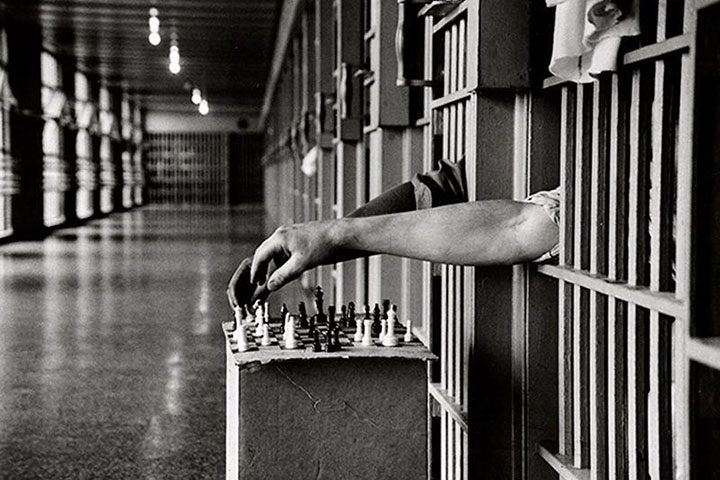
Prisons as we know is contained in the Exclusive Legislative List No. 48 of the Second Schedule to the Constitution of the Federal Republic of Nigeria 1999 as Amended. This means only the federal Government can legislate on matters concerning the Prisons. There will be the need to move it (Prison) to the Concurrent Legislative List, to enable the States be able to make imputes, which may come with the States assisting to build new prisons, to accommodate the large number of inmates.
Advisedly, since the name of the place of detention has been changed from ‘prison’ to ‘custodial centres’, all other words or terms which seem to still use the negative or such pejorative connotations, should be re-written to positives terms. And the name of the person in such centres not be called ‘prisoners’ anymore.
Custodial sentence as it were, targets those inmates already in the custodial centres. And who have endured the hardship while awaiting trial, which in most cases take years to get to judgment state. These measures on their own may not help much in reducing the number of inmates inside the custodial centres.
Rather, very specific efforts should be made to deal with this issue of congestion frontally. What is contained in Sections 293-299 and 276 of the ACJA, Sections 264-267 Lagos State ACJL, and Sections 300-306 and 383 of the Rivers State ACJL are not adequate for this purposes.
The legislature should rewrite the provisions to shorten detention periods or remand periods; period for the release of legal advice in matters, and there should be a specific and clear provisions on what the courts is to do when the legal advice is not released as requires, etc. If this is done the number of awaiting trial inmates would be reduced.
ENDNOTE
* Mr. Ihua-Maduenyi, is a Chief Magistrate with the Rivers State Judiciary.
Stdidymus100@gmail.com
David.ihua-maduenyi@riversstate.gov.ng
234-8037064151.
1. Black’s Laws Dictionary Eighth Edition page 412
2. Op. Cit. 1393
3. Webster’s New World Law Dictionary
4. Op. Cit.
5. Op. Cit.
6. Chief Anthony Emeka Ani V. The State (2002)1 NWLR (PT. 747) 217, or (2001) LPELR 5446 CA.
7. Data from goggle, accessed on 6/04/2021 by 11:40 am.
8. Section 12 (8).
9. Section 12 (4) - (6).
10. Section 12 (7) of the Nigerian Correctional Services Act 2019.
11. Section 12 (11) and (12) supra.
12. Section 12 (10) supra.
13. Okoro V. State (1998)14 NWLR (PT. 584) .
14. Slap V. AGF (1968) NMLR 326.
15. United Nations (UN) Tokyo Rule 1.5.
16. United Kingdom (UK) Parliament Post, Post Note Number 613, Page 2, January, 2020.
17. Section 1 (1) and (2) supra. Also, Section 1 (1) and (2) of the ACJL of Rivers State, No. 7 of 2015.
18. Prof. Y. Akinseye-George, SAN, An overview of the changes and Application of the Administration of Criminal Justice Act, 2015 in Issues on Criminal Justice Administration page 21.
19. Sections 319 – 326 of the Act; Section 285 (3) ACJL Lagos State, and Sections 326 – 333 of the ACJL Rivers State.
20. Sections, 327, 422 – 424, 434 and 437 of the Act; Section 318 ACJL Lagos State; Section 318 Ekiti State Law; Section 363 Anambra State Law, and Section 334 ACJL Rivers State.
21. Sections 439 – 440 of the Act; Sections 331 – 339 of Lagos State Law, and Sections 447 – 461 of the Rivers State Law.
22. Sections 441 – 451 of the Act.
23. Black’s Law Dictionary Op. Cit. Page 1240.
24. Sections 453 – 459 of the Act; Sections 463 – 469 Rivers State Law and Sections 341 – 346 Lagos State Law.
25. Section 460 (1) of the Act, and Section 470 (1) of the Rivers State Law.
26. Sections 460 (2) – 466 of the Act; Section 347 (4) of Ekiti State Law; Section 347 Lagos State Law; Section 457 Cross Rivers State Law, and Sections 470 (2) – 476 Rivers State Law.
27. Section 467 of the Act; Section 477 Rivers State Law, and Section 348 Lagos State Law.
28. Section 468 of the Act, and Section 478 Rivers State Law.
29. Section 490 (f)-(g) of the Act; Sections 354 (1) (f)-(g), 500 (1) (f)-(g) Rivers State Law.
30. Section 500 (3) – (6) of the Rivers State Law.





 214
214
©www.triplenet.com.ng/lawparliament
All right Reserved